Jamieson twins
The Outsider (Stephen King Edition)The Jamieson twins are the eleven-year-old boys whose disappearance into Marysville Hole ended in a cave disaster that killed both them and the rescuers who went after them. They are recalled less through personal history than through the route of their lost expedition: a dropped toy Chief Ahiga, a search through the cave’s lesser-known entrance, and a collapse that left their bodies deep underground. Their fate makes the cave’s history more than a local tragedy; it becomes part of the physical and moral danger facing the later investigation.
Identity and Disappearance
The twins are identified as eleven-year-old boys who went missing in the passages of Marysville Hole. Lovie Bolton compares their story to Tom and Becky getting lost in the cave in Tom Sawyer, but stresses the decisive difference: the fictional children found their way out, while the twins did not. The comparison gives the episode the shape of a familiar adventure turned irreversibly tragic.
Their family relationship is not developed in the account, and the narrative provides no individual names or distinct personalities. They appear instead as a pair, remembered through their shared fate and through the search that followed. That absence of personal detail does not diminish their importance: it marks how the cave’s history has reduced two children to a local story of disappearance, rescue, and loss.
The Rescue Attempt
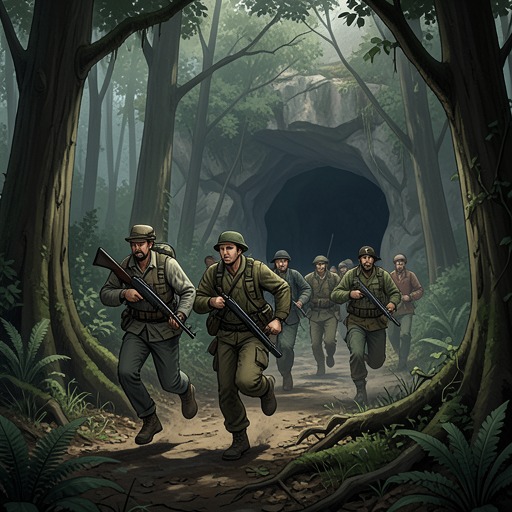
After the boys were heard crying and calling from the Ahiga side of the cave, Roger Bolton proposed going around to that entrance, which he knew from his earlier explorations. The rescue party collected ropes and lights from the equipment building and entered the passages to bring the children out. What seemed like the right response became the beginning of a second loss: the rescue party did not return either.
Ev Brinkley remained outside to pay out the rope and attach more if needed. When he heard a sharp report, he was down to his last hundred feet of free rope. Lovie believes someone fired a pistol in the hope that the sound would guide the boys toward the rescuers, and that the shot triggered a cave-in. She rejects the idea that Roger fired it, describing him as foolish in other respects but not reckless enough to shoot in a cave where a ricochet might travel unpredictably. The precise cause remains a reconstruction rather than a directly witnessed fact, but the story makes the central danger clear: an attempted signal in an enclosed, fragile passage may have worsened the emergency it was meant to solve.
The cave’s acoustics complicate that reconstruction. The Chamber of Sound was famous for carrying a quiet voice from far below to visitors at the top, while Lovie says the gunshot occurred in Devil’s Slide, where its sound would have been dampened. The cave could transmit sound astonishingly well in one place and muffle it in another. Its acoustic character was not merely a curiosity for tourists; in the rescue story, it helps explain how people could misjudge where cries came from and how a signal might fail to guide the search.
Marysville Hole and the Cave’s History
The cave was described as the largest in Texas, and its public route led visitors toward the Chamber of Sound, a vast chamber with pictographs on its walls and stalactites overhead. A guide could stand hundreds of feet below and recite the Pledge of Allegiance in a whisper, yet be heard at the top. An iron spiral staircase of more than four hundred steps descended toward the bottom; an elevator offered a way back up. These details establish a place carefully organized for tourism, but also one whose scale and vertical passages made exploration difficult.
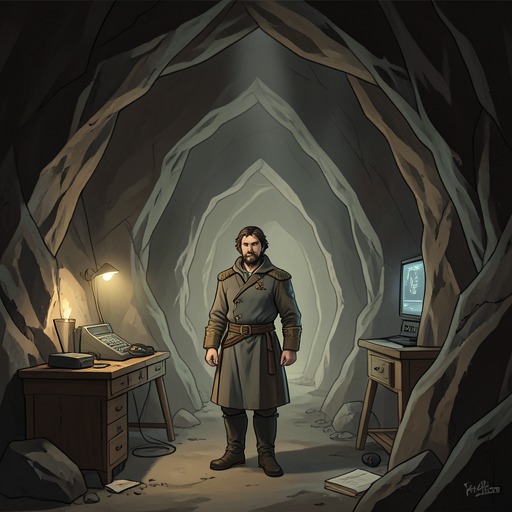
The Ahiga entrance was a less prominent access point, connected directly to the Chamber of Sound. Staff used it to bring in supplies, and it served as an emergency exit. Roger’s familiarity with that side made it the route the rescuers chose in the hope of reaching the boys by an alternate passage. The distinction between the celebrated public entrance and the service entrance matters: the rescue depended on access to a part of the cave less familiar to ordinary visitors, but knowing the entrance did not make the maze beyond it safe.
After the disaster, search parties entered Marysville Hole over the years, but an earthquake in 2007 changed the cave’s status. Though the tremor measured only three or four on the Richter scale, it brought down stalactites and collapsed passages, including one known as the Art Gallery. The cave was then closed. Its main entrance was cemented over to prevent further losses, and the Ahiga entrance was boarded up; the later account notes uncertainty about whether that back entrance had also been sealed with cement.
Memory and Narrative Significance
A plastic figure of Chief Ahiga dropped from one of the twins’ pockets becomes a small surviving trace of their passage into the cave. Much later, at a memorial niche marked WE WILL NEVER FORGET, several old toy versions of the chief lie near a dusty vase. The toys have aged and cracked, while the niche has remained untouched even by people who left spray-painted tags nearby. The dropped figure connects the boys’ disappearance to a memorial practice that keeps their loss present in the landscape.
When Holly Gibney explains the cave’s history to Ralph Anderson, she returns to the twins’ disappearance as the reason rescuers entered the Ahiga passages and as an essential part of the danger there. In the final confrontation, the Outsider invokes the boys and the rescue party to warn Ralph against firing his weapon: a gunshot might dislodge stalactites or bring down the bluff. The warning draws on a past disaster to constrain action in the present. The twins’ fate thus persists not as a resolved mystery but as knowledge embedded in the cave’s geography: a reminder that the same unstable roof and treacherous passages that defeated the rescue may still determine who can safely move through them.